


How online reviews affect your business's reputation
A few years ago, a business could survive on print advertising, traditional marketing and a few good relationships. Today, the reality is very different: a single post, a single phrase or a single review on Google or TripAdvisor can significantly influence a potential customer's decisions. Customer reviews are no longer just “comments”. They are real experiences in public view that directly shape a business's reputation and credibility and, ultimately, its revenue.
Whether you run a hotel, a restaurant, a clinic or an online store, review management is a strategic tool. And the question is no longer whether you will receive reviews, but how you will manage them to your advantage.
What reviews are and how to get them
Reviews are the ratings your customers leave on online platforms after interacting with your service or product. They usually include some comments and a score (stars, numbers, etc.) and are publicly visible on platforms such as:
- Google (via Google Business Profile)
- TripAdvisor
- Booking.com
- Trustpilot
- Skroutz, efood, Wolt
Getting reviews is neither a matter of chance nor complicated.
It takes a strategy based on encouragement. We are not talking about fake reviews; not only is that unethical, but platforms are now monitored very closely. Instead, what you should do is ask your satisfied customers, simply and respectfully, to share their experience.
When should you do this? At the right moment, of course. After a purchase, after a great meal, after check-out or by email. When the experience is recent and positive, a good review is more likely. And yes, it is perfectly fine to ask for a review; you just need to ask politely. You can also offer a small, non-monetary incentive, such as entry into a competition or priority on a future booking.
How reviews affect your business
The answer is simple: much more than you think. According to recent studies:
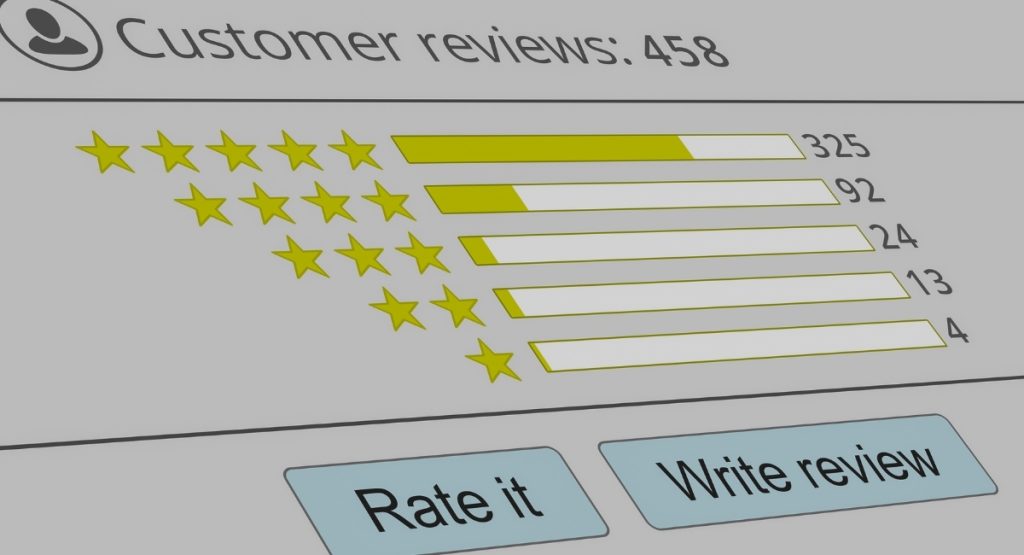
- 87% of customers read online reviews before choosing a local business
- 79% say they trust online reviews as much as personal recommendations
- One extra star on your Google rating can increase your conversion rates by 25%
Reviews affect not only the psychology of potential customers but also your business's SEO. Search engines, especially Google, “read” reviews and use them to assess your relevance and credibility. More positive reviews = greater visibility = more sales.
In practice, a Google Business Profile with 50+ positive reviews attracts significantly more traffic than one with 5 or 10 positive reviews.
Common mistakes in review management
Despite their growing importance, many businesses still make critical mistakes when managing reviews. The most common mistakes are:
- Indifference. Not monitoring or not replying to reviews, whether positive or negative. This signals indifference and a lack of engagement with customer feedback.
- Generic replies. Standard replies such as “thank you for your review” show that you have no real relationship with your customers. Your replies should be personalised and show that you paid attention to what the customer wrote.
- Getting defensive or attacking. A negative review is not an attack. Replying with sarcasm or accusations, or getting into a public argument, can do more harm than the original negative comment.
- Asking only “easy” customers for reviews. A balanced review profile is built on many genuine voices. Relying solely on friends, relatives or carefully selected customers limits your credibility.
How to handle a negative review
Sooner or later, it will happen. There is no business that has never received a negative review. The key is how you respond. Handling a negative comment well can strengthen your business's reputation more than a positive review.
- Respond calmly. Acknowledge the customer's point of view, even if you disagree with it. Show empathy: “We are sorry that your experience did not live up to your expectations…”.
- Acknowledge the problem. If a mistake really was made, accept it. A sincere and genuine apology will count in your favour.
- Offer a solution. Suggest a solution or ask for personal contact: “We would like to make this right. Please get in touch with us…”.
- Think long term. Your reply is not only for the person who wrote the review. Your future customers will see how you handled it, and that will give them confidence in you.
How to get more and better reviews
Below, we will look at some strategic moves together:
Start by investing in the quality of the experience you offer.
No marketing trick can fix a generally poor experience. The more consistently you deliver what you promise, or go beyond it, the more naturally positive reviews will follow.
Second, create a communication flow.
A polite email showing genuine interest (“Thank you for choosing us. We would appreciate a review from you”) can make all the difference.
Third, train your team.
Staff who interact with customers should know that every interaction can lead to a review. If they know how to make a good impression, it will show in your reviews.
Finally, make reviews part of your company culture.
Treat them not as a burden but as a growth tool. Discuss reviews, solve problems and improve processes.
Reviews are not just numbers; they are opportunities.
Customer reviews are not just numbers next to your company name.
They are the stories of people who trusted you. They are published experiences that either build or undermine your brand. And above all, they are a unique opportunity to communicate with your audience and prove, day after day, that you deserve their trust.
When you approach reviews strategically, consistently and honestly, they can become your most powerful marketing advantage. And that advantage cannot be bought; it is earned.
Read here how reviews affect your business.